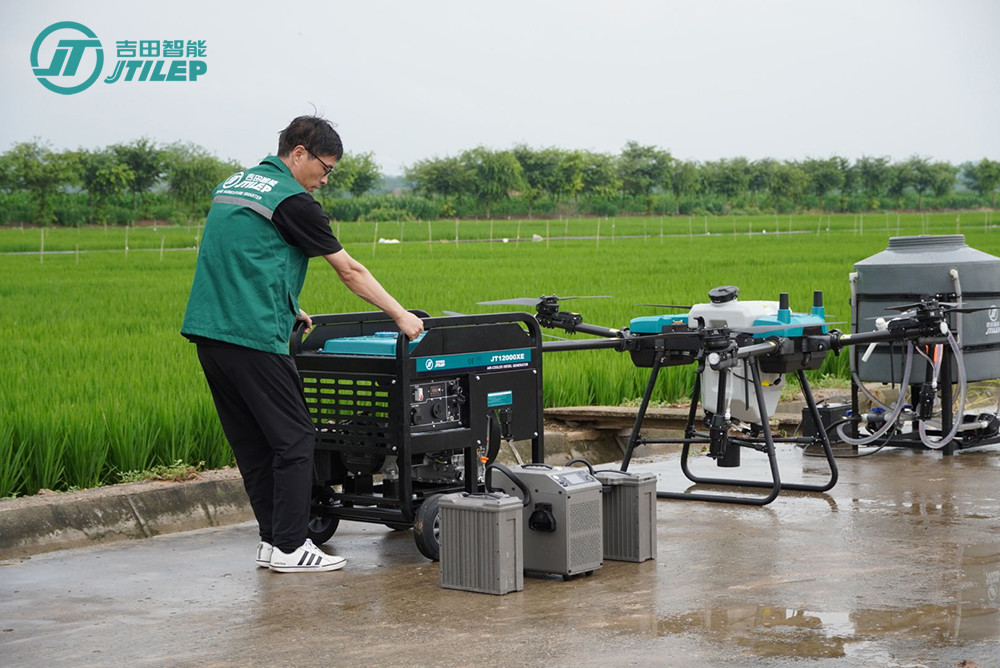
Farmers are increasingly embracing the use of agricultural drones for precision farming. These unmanned aerial vehicles (UAVs) equipped with advanced imaging technology are revolutionizing the way farmers manage crops and livestock.
One of the main benefits of agricultural drones is their ability to provide farmers with real-time data and insights about their fields. Drones can capture high-resolution images of crops, which can then be analyzed to identify areas that need attention, such as nutrient deficiencies or pest infestations. Gfrp Agricultural Sprayer This allows farmers to take immediate action and deliver targeted treatments, reducing the need for blanket applications of fertilizers or pesticides.
Agricultural drones can also help farmers optimize irrigation practices. 20L Agriculture Drone By analyzing images captured by drones, farmers can identify areas of their fields that are over- or under-watered. This information can then be used to adjust irrigation schedules and ensure efficient use of water, resulting in water and cost savings.
Agricultural drones can also be used for crop monitoring throughout the growing season.40L Agriculture Drone By regularly surveying fields, farmers can track the growth of their crops and detect any problems that may arise, such as nutrient deficiencies or diseases. This allows for early intervention and increases the chance of a successful harvest.
Drones can also be used for livestock management. Farmers can use drones to monitor the health and behavior of animals, ensuring their well-being and identifying any potential issues. Drones can also be used to locate and round up livestock, saving farmers time and labor.
One of the main benefits of agricultural drones is their ability to provide farmers with real-time data and insights about their fields. Drones can capture high-resolution images of crops, which can then be analyzed to identify areas that need attention, such as nutrient deficiencies or pest infestations. Gfrp Agricultural Sprayer This allows farmers to take immediate action and deliver targeted treatments, reducing the need for blanket applications of fertilizers or pesticides.
Agricultural drones can also help farmers optimize irrigation practices. 20L Agriculture Drone By analyzing images captured by drones, farmers can identify areas of their fields that are over- or under-watered. This information can then be used to adjust irrigation schedules and ensure efficient use of water, resulting in water and cost savings.
Agricultural drones can also be used for crop monitoring throughout the growing season.40L Agriculture Drone By regularly surveying fields, farmers can track the growth of their crops and detect any problems that may arise, such as nutrient deficiencies or diseases. This allows for early intervention and increases the chance of a successful harvest.
Drones can also be used for livestock management. Farmers can use drones to monitor the health and behavior of animals, ensuring their well-being and identifying any potential issues. Drones can also be used to locate and round up livestock, saving farmers time and labor.
The use of agricultural drones in precision agriculture is growing rapidly as farmers realize the many benefits they bring. From providing real-time data and insights to optimizing irrigation and crop management, these drones are revolutionizing the way farmers do agriculture, resulting in greater efficiency, lower costs and greater sustainability.